

 EUR/USD
  GBP/USD
  USD/ZAR
  EUR/INR
  EUR/GBP
  XAU/USD (Gold)
  XAG/USD (Silver)
  XM Global
  AvaTrade
  RoboForex
  IC Markets
  LiteFinance
  IUX Markets
  FP Markets
  South Africa
  Thailand
  Singapore
  Japan
Japan  Pakistan
  Malaysia
  Philippines
  Brazil
  Bangladesh
  Vietnam
  India
India 
Gold Trading Guide for Beginners: XAU/USD
Gold trades in the forex world as XAU/USD, which is simply the price of gold measured against the US dollar. It’s popular because it moves well and often climbs when markets get nervous, since traders treat it as a safe place to park money. The flip side is that gold can be fast and jumpy, with bigger swings than most currency pairs, so it can hit your stop quickly if you oversize. Start small, respect the volatility, and treat tight risk control as your first priority while you learn how it moves.




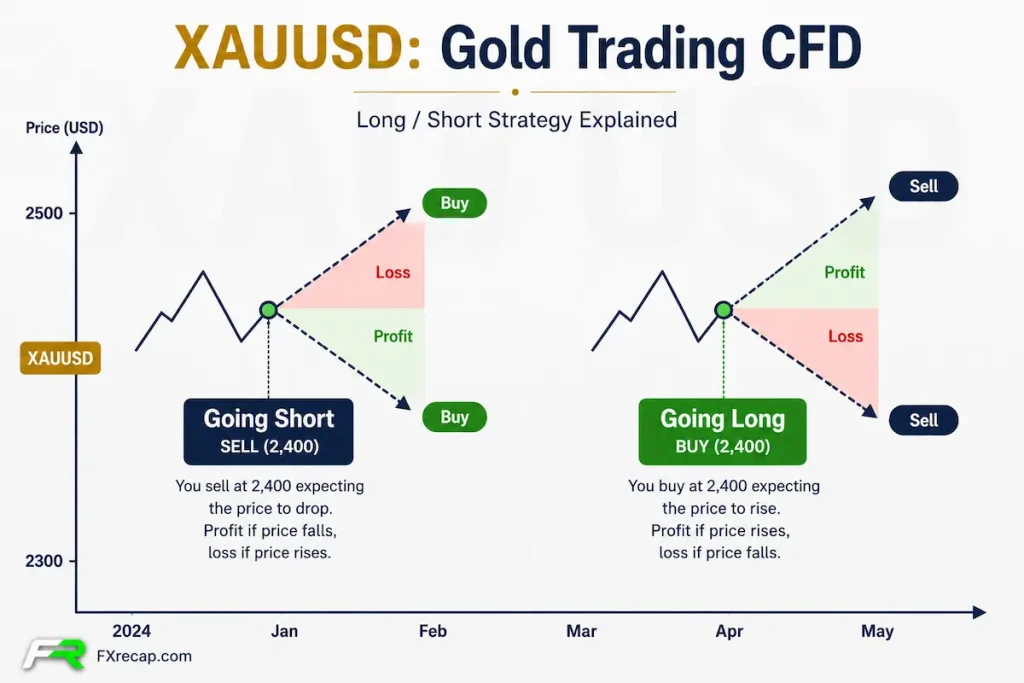
Gold can be traded through several instruments, including spot contracts, CFDs, futures, ETFs and options, depending on the broker or exchange. Gold prices have experienced significant volatility in recent years, reaching record highs as demand for safe-haven assets increased. Before placing a trade, beginners should understand the main factors that influence gold prices, choose the right trading instrument, and learn effective risk management.
What Gold Trading Means
Buying physical gold and trading gold are two very different approaches. Physical gold means owning coins or bars, storing them, and insuring them. Gold trading, by contrast, is speculation on price movement through instruments like CFDs, spot contracts, or futures, without owning the physical metal of the metal. You can open a buy position if you expect the price to rise or short if you expect it to fall, and your profit or loss comes from the difference between your entry and exit price.
Gold is quoted per troy ounce (31.1035 grams), with XAU/USD representing the price of one troy ounce of gold in US dollars. When you see a quote of, say, $4,050, that’s the market’s live valuation of a single ounce against the US dollar.
The Different Ways to Trade Gold
Each gold trading instrument is designed for different trading objectives and levels of experience. The following table compares the main options.
| Instrument | How It Works | Best Suited For |
| Spot Gold (XAU/USD) | A continuously updated price with no expiry date, quoted per troy ounce against the dollar. | Active traders who want flexible position sizes |
| Gold CFDs | Contracts that track the spot price, letting you profit from the difference between entry and exit without owning any metal. | Beginners testing strategies with smaller capital |
| Gold Futures (GC, MGC) | Standardized, exchange-traded contracts with a fixed expiry and contract size. | Traders who want exchange-regulated exposure and are working with larger accounts |
| Gold ETFs | Shares that track the price of gold and trade on a stock exchange during market hours. | Longer-term holders who prefer a brokerage account over a trading platform |
| Physical Gold | Coins or bars bought and held directly, with storage and insurance costs attached. | Long-term savers, not active traders |
| Mining Stocks | Shares in companies that produce gold, moving with both the gold price and company performance. | Equity investors comfortable with company-specific risk |
What Actually Moves the Gold Price?
Unlike individual stocks, gold prices are not driven by company earnings or product launches.It reacts to a specific set of macro forces, and knowing them helps you read the chart with more context helping traders analyse price movements with greater confidence.
US dollar strength. Gold is priced in dollars, so a weaker dollar tends to make gold cheaper for holders of other currencies, which usually lifts demand.
Real interest rates and yields. Gold pays no interest, so when real yields fall, holding it becomes relatively more attractive compared with bonds or cash.
Inflation expectations. Gold has long been used as a store of value when investors worry that currency purchasing power is eroding.
Central bank purchases, particularly from countries increasing their official gold reserves, can support long-term demand for gold.
Geopolitical risk. Wars, sanctions, and political instability push investors toward gold as a safe haven, often sharply and quickly.
Getting Started, Step by Step
Choose a regulated broker that offers competitive spreads, reliable execution and access to gold trading. Practice on a demo account first, placing trades against live prices before any real money is exposed to market risk. Once you decide to trade with real funds, select the instrument that best matches your trading capital and experience. Many brokers allow smaller position sizes when trading spot gold or CFDs, although minimum trade sizes vary by broker.
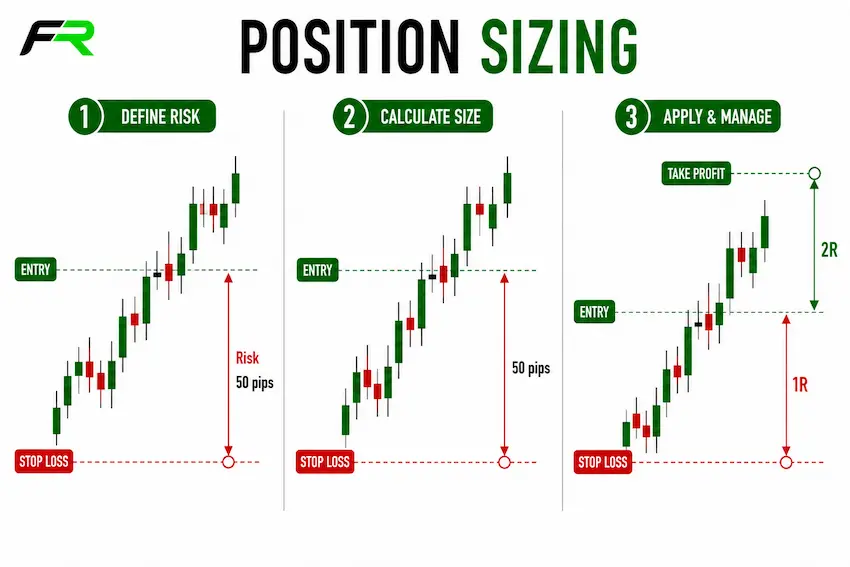
From there, size each position around a fixed percentage of your account instead of choosing a position size without a structured risk-management plan, and set your stop-loss before you enter the trade, not after price has already moved against you. It also helps to analyse higher-timeframe charts on the daily or 4-hour chart before dropping to lower timeframes. Lower timeframes contain more short-term market noise, making disciplined execution more challenging for beginners.
Simple Setups Suitable For Beginners First
Beginners should focus on mastering one proven trading strategy before exploring additional approaches.One setup, learned properly and backtested on real data is generally more effective than constantly switching between different trading methods.
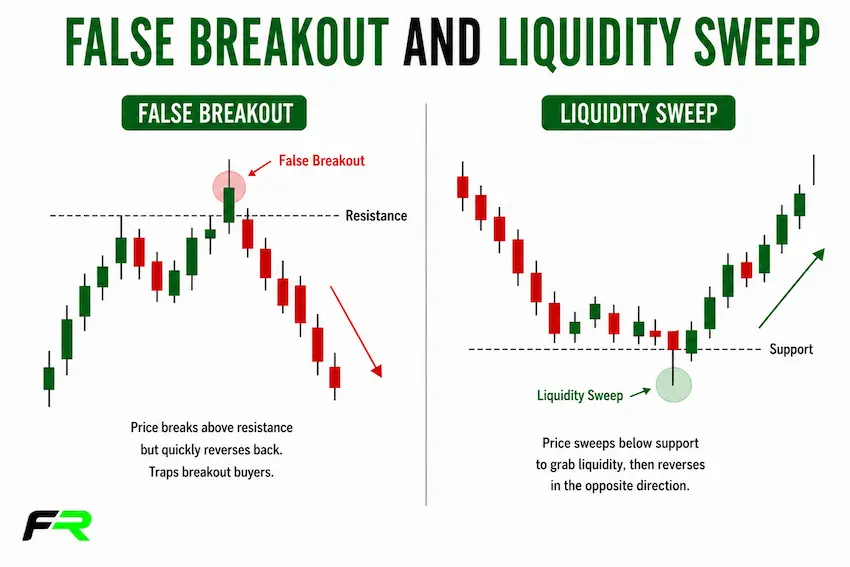
Trend pullback: wait for a clear trend to form, enter once price retraces and prints a confirming candle in the trend direction, and place your stop beyond the pullback’s high or low.
Range bounce: in a sideways market, look for RSI to reach oversold near support or overbought near resistance, then wait for a reversal candle before entering.
Breakout after consolidation: look for a tightening price range with narrowing Bollinger Bands, enter in the direction of the breakout once it’s confirmed by a strong candle, and keep the stop inside the old range.
Timing Your Trades
Gold trading is available for most of the trading week, although liquidity varies throughout the day. The London–New York overlap generally provides the highest liquidity, although the exact hours change during Daylight Saving Time. Trading outside this period is possible, although spreads may widen and market liquidity can decrease.
Risk Rules for Beginners
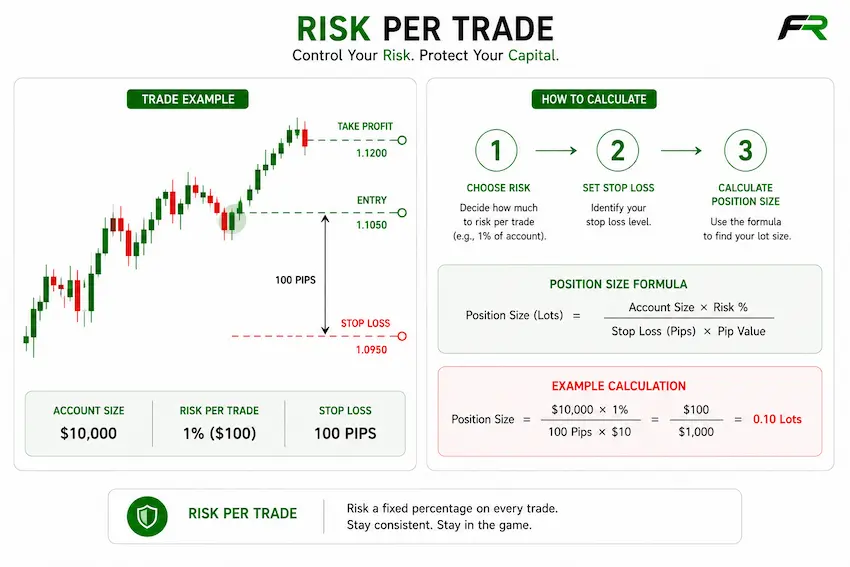
Many experienced traders choose to risk only a small percentage of their trading capital on each position, although acceptable risk varies by individual strategy. Base your stop-loss distance on the chart structure itself rather than on how much you’re personally comfortable losing, and avoid opening several gold positions that create the same market exposure through multiple positions. Monitor the economic calendar before opening new positions.Events like NFP, CPI, and FOMC decisions can cause significant volatility in gold prices, and spreads often widen right before release.
Maintaining a trading journal can help beginners identify strengths, weaknesses and recurring trading patterns. Record the setup, the reason you entered, and the outcome for every trade, then review it weekly to see which strategies consistently perform well and which decisions were driven by short-term market noise.
Gold Trading Terms You Should Know
| Term | Meaning |
| Pip | The smallest standard price move tracked on a gold chart. |
| Spread | The gap between the buy price and the sell price your broker quotes. |
| Leverage | Borrowed capital that lets you control a larger position than your deposit alone would allow. |
| Margin | The deposit a broker holds aside to keep a leveraged position open. |
| Lot size | The contract size of your trade, which decides how much each price move is worth in your account currency. |
| Volatility | How sharply gold’s price swings within a given period. |
FAQs
Is gold trading good for beginners?
Yes, provided you start small, practice on a demo account first, and treat risk management as non-negotiable. Gold’s price swings can be sharper than most forex pairs, which rewards discipline and punishes guesswork.
How much money do I need to start trading gold?
It depends on the broker and instrument. Gold CFDs typically allow you to open a position with a few hundred dollars because of fractional lot sizes, while gold futures usually need a larger account due to their standardized contract size.
What is the best time of day to trade gold?
The London and New York session overlap, when liquidity and trading volume are at their highest and spreads tend to be at their tightest.
Why does the gold price move opposite to the US dollar?
Gold is priced in dollars, so when the dollar weakens, gold becomes cheaper for holders of other currencies, which tends to lift demand and push the price higher. The relationship isn’t perfect, but it holds often enough to matter for traders.
Can I lose more than I deposit trading gold CFDs?
With most regulated brokers offering negative balance protection, no. Always confirm this directly with your broker, since protections vary by regulator and jurisdiction.
Should beginners trade gold with leverage?
A modest amount of leverage can work once a stop-loss and position size are planned in advance. High leverage paired with no risk plan is exactly how new accounts get wiped out on a single gold move.
Before You Place Your First Trade
Successful gold trading relies more on discipline, patience and effective risk management than on predicting every market move. A beginner who picks one instrument, learns what consistently influences price movements, and protects their capital on every single trade will achieve long-term consistency compared with traders who frequently change strategies or switch between multiple timeframes without a clear trading plan.
Compare regulated brokers and their gold trading conditions on FX Recap before opening an account, since spreads, leverage limits, and execution speed can differ significantly between brokers, making comparison an important part of choosing a trading provider.

FX Recap helps you find a trusted forex broker that keeps your trades secure and guides you through everything you need to know about FX instruments.

Ranjan Niskrity is a seasoned Crypto and Forex expert at FX Recap with over a decade of market experience. He specialises in verifying broker data, regulatory frameworks, and cryptocurrency trading insights. His rigorous fact-checking ensures every article meets the highest standards of accuracy.
Related Articles
 Education
9 min read
Education
9 min read

 Education
11 min read
Education
11 min read
 Education
10 min read
Education
10 min read
 Education
7 min read
Education
7 min read
